Paris Photographed is not a guide to tourist angles. It is an examination of why Paris looks the way it does, and what that means for anyone raising a camera toward its limestone facades, its zinc rooflines, its bridges, or its nocturnal boulevards.
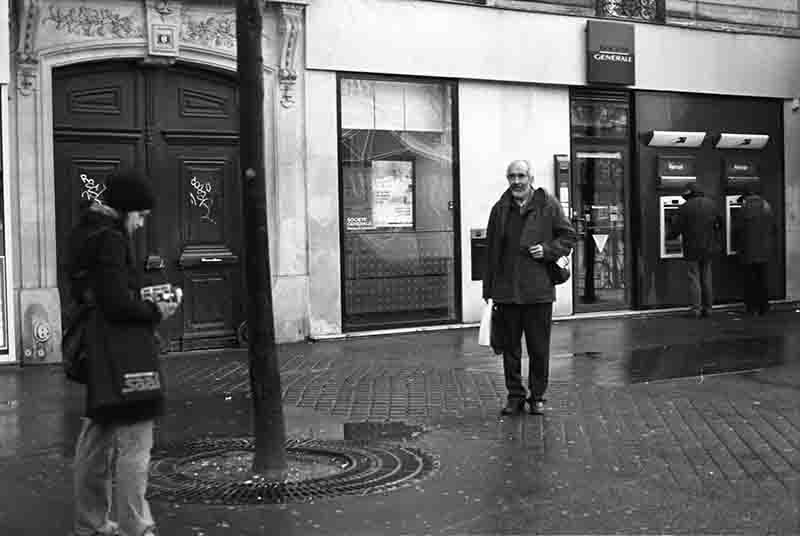
A significant theme in the analysis of Parisian photography is the "democratic" lens, which challenges traditional artistic hierarchies. This method, exemplified by photographers like Jans Bock-Schroeder, shifts the focus from grand architecture to the "bric-a-brac" of the city.
There is a moment, familiar to anyone who has arrived in Paris by train and emerged from the Gare du Nord into the street, when the city simply looks like itself. Not like a postcard of itself. Not like the establishing shot of a romantic comedy. Like a place that has decided, with great deliberateness and over a very long time, what it wants to look like, and has stuck to that decision through revolutions, occupations, economic booms, and the relentless pressure of real estate markets that have tested every other city's resolve and found it wanting.
This is not a small achievement. In an era when the skylines of London, New York, and Shanghai are remade on a rolling basis by the appetites of developers and the flexibility of municipal governments happy to accommodate them, Paris remains, from its rooftops to its limestone facades to the width of its boulevards, recognizably, stubbornly, itself.
The city deserves examination not because it is uniquely beautiful, though it is beautiful, but because it is the most instructive example in the developed world of what urban visual coherence actually requires. It requires political will. It requires public investment. It requires the willingness to tell powerful private interests that the appearance of the city is not theirs to determine.
The Haussmann Lesson, Honestly Told
The transformation of Paris under Baron Haussmann in the 1850s and 1860s is frequently invoked as an act of urban vision. It was also an act of urban violence. Haussmann demolished roughly sixty percent of medieval Paris, its churches, its markets, its densely inhabited working-class neighborhoods, to build the broad boulevards, regulated building lines, and organized park systems that visitors now regard as timeless Parisian character.
The Regulatory Paradox
The displacement of the poor to the periphery, the destruction of communities, the ruthless subordination of existing life to a planned ideal: these are not incidental to the Haussmann legacy. They are central to it. Any serious argument about urban visual character must hold both things simultaneously, the beauty that resulted, and the means by which it was produced.
What Haussmann created, alongside his boulevards, was a set of building regulations so specific and so consistently enforced that they amounted to a design code for the entire city. Cornice heights. Facade rhythms. The mansard roof that gave the Parisian skyline its characteristic silhouette. These were not suggestions. They were requirements, backed by the legal authority of the state and the personal ambition of a prefect who understood that visual coherence at urban scale could only be achieved if individual builders were significantly constrained.
The Three Pillars of Haussmann's Visual Code
Cornice Heights
- Uniform street wall across entire blocks
- Eliminated visual disorder at roofline
- Created the horizontal sky-edge seen today
- Legally mandated, not advisory
Façade Rhythms
- Standardised window proportions by floor
- Balcony alignments across buildings
- Stone material specifications
- Enforced across 60% of new Paris
The Mansard Roof
- Defines the Parisian skyline silhouette
- Zinc cladding creates the grey-blue horizon
- Dormers add vertical rhythm
- Still mandated in historic arrondissements
Paris is the most powerful counterexample available to urban planners anywhere in the world to the claim that the market, given freedom, will produce good cities. The visual quality of central Paris is not a market outcome. It is a regulatory outcome.
What the Stone Actually Costs
The limestone facades of Paris require maintenance. They always have. The characteristic cream color of a well-maintained Haussmann building is the color of cleaned stone. Left unattended, the same limestone darkens to near-black from atmospheric pollution, as it was for most of the twentieth century before the Malraux laws of the 1960s mandated the cleaning of historic facades.
Key Policy Fact: The transformation of Paris from a sooty, darkened city to the pale luminous city of contemporary photographs was not a natural process. It was a public works program, financed by the state, implemented over decades, and maintained by ongoing regulation requiring building owners to clean their facades on a regular schedule.
This is an important and underreported aspect of what Paris looks like and why. The beauty of the city is, in part, a maintenance operation. When a Parisian building owner is required by law to clean their facade, they are being asked to contribute to a collective visual project that exceeds their individual property.
The cream limestone of a cleaned Haussmann façade has a measured reflectance temperature of approximately 3,200–3,500K under sodium-vapour street lighting, producing the characteristic warm amber glow of classic Paris night photography. The LED transition (see below) shifts this toward 4,000K, materially changing the colour character of nighttime exposures.
American cities, for the most part, have never made this argument seriously. The appearance of private property is understood as a private matter, and the visual character of the street is treated as an accidental outcome rather than a collective responsibility. The results are visible in the streetscapes of virtually every American city: a visual incoherence that is not vitality or diversity but the simple absence of any shared standard applied consistently over time.
The Height Question
For most of its modern history, Paris has enforced strict limits on building height in the central city. The current rules allow a maximum of around 37 meters, roughly twelve stories, in most of the city, with certain designated zones permitting taller structures.
The result is that the Paris skyline, viewed from any elevated point, is remarkably horizontal: a sea of zinc roofing and mansard dormers interrupted by church spires and the occasional tower, with the Eiffel Tower and the towers of La Défense, the business district deliberately located outside the historical center, visible on the horizon.
Timeline: Paris Height Regulation & Urban Policy
Haussmann's Reconstruction
Baron Georges-Eugène Haussmann, as Prefect of the Seine under Napoleon III, demolishes approximately 60% of medieval Paris and imposes the first comprehensive building code: uniform cornice heights, mansard rooflines, and façade proportions. The visual DNA of central Paris is fixed.
Loi Malraux
Minister of Cultural Affairs André Malraux passes landmark legislation mandating the systematic cleaning of historic building façades. Paris begins its transformation from a soot-blackened city to the pale limestone metropolis familiar from contemporary photography. A public-works programme at urban scale.
Tour Montparnasse & the Height Backlash
The 210-metre Tour Montparnasse opens and immediately becomes the most-hated building in Paris, visible for miles across the low-rise skyline. Public and political backlash leads to the strict 37-metre height ceiling for central Paris that remains in force today. The tower stands as the city's most effective argument for height restrictions.
Eiffel Tower Illumination System
Golden floodlights are installed on the Eiffel Tower, running from dusk until approximately 1 a.m. The hourly sparkling display using 20,000 bulbs is introduced in later upgrades. The tower becomes one of the most photographed illuminated structures on earth, its five-minute display animating the surrounding city on the hour.
Grand Paris & the Densification Debate
The Grand Paris project envisions major infrastructure expansion and densification primarily in the suburban ring. Height restrictions in the historical centre remain contentious as housing costs render Paris increasingly unaffordable. The question of whether visual preservation and social equity can coexist is unresolved.
Notre-Dame Fire & Restoration
The April 2019 fire destroys the cathedral's spire and much of its roof. A remarkable five-year restoration effort, unprecedented in scope and speed, culminates in the cathedral's reopening in December 2024. The stonework is cleaned to a whiteness unseen in centuries.
Notre-Dame Fully Open · LED Transition Underway
Notre-Dame de Paris is fully accessible and newly illuminated, representing the most significant new photographic subject in the city. Simultaneously, Paris's systematic shift from warm sodium-vapour street lighting to cooler LED fixtures is materially changing the colour temperature of night photography citywide, the golden Paris of Brassaï is becoming, incrementally, a silver one.
Photography Impact: The Horizontal Skyline
The 37-metre height limit is what makes the blue-hour light work so dramatically in Paris. With no tall towers interrupting the horizon within the périphérique, the western sky remains visible above the roofline long after sunset, creating an extended golden and blue-hour window that London, New York, or Hong Kong cannot replicate. The restriction is both a housing policy and, inadvertently, the city's greatest photographic asset.
Paris has, in recent years, begun cautiously relaxing its height restrictions in certain areas. Whether the Grand Paris densification represents a reasonable adaptation to housing pressure or the beginning of the kind of incremental capitulation that has remade the skylines of London and Sydney and Toronto is a question the city is actively and contentiously working through.
What Happens After Dark
There is a second city inside Paris that appears only after nightfall, worth examining not because it is more romantic than the daytime city (which is the usual reason it gets examined) but because it reveals, with unusual clarity, how much of the city's visual character is the product of decisions about artificial light.
Paris at night is not dark. It is not, by the standards of Las Vegas or Times Square or the neon corridors of Tokyo's Shinjuku, aggressively illuminated. It occupies a middle register that is, photographically and perceptually, exceptionally productive: bright enough to see by, dark enough to retain shadow, varied enough in its light sources to create a complex and layered visual field.
The Colour Temperature Shift: Brassaï to LED
The Sodium-Vapour Era
- Temperature: ~2,200K warm amber-orange
- Character: Golden facades, deep blue-black sky
- Exemplar: Brassaï's 1930s nocturnal photographs
- On limestone: Reflected warmth at ~3,200–3,500K
- Status: Being systematically phased out
The LED Era (2026)
- Temperature: ~3,500–4,000K cooler, bluer
- Character: Crisper, less warmth on stone
- Impact: Gradual but perceptible shift
- Photographers report: "Golden Paris going silver"
- Policy gap: No colour-management framework yet
The key was the color temperature of Parisian street lighting. For decades, the city relied on sodium vapor lamps, the warm, amber-orange fixtures that gave old photographs of nocturnal Paris their characteristic golden cast, the color that Brassaï captured in the 1930s in images that remain the definitive visual record of what Paris after midnight looked like in the twentieth century.
The golden Paris of Brassaï is becoming, incrementally, a silver one. This transition is happening in cities everywhere, and nowhere is it being managed with particular sensitivity to visual consequence. Paris, for all its regulatory sophistication in matters of daytime appearance, has not yet developed a comparable framework for the management of artificial light as a component of urban visual character.
Structural Revelations: What Darkness Makes Legible
The Haussmann boulevards, lit from below by streetlamps and from above by the illuminated facades of the buildings they line, become tunnels of warm light converging on their terminating monuments. The Seine, catching the reflections of the bridges and the buildings along the quais, becomes a second visual plane running beneath the first.
The bridges, Paris has thirty-seven crossing the Seine within the city limits, each architecturally distinct, become, at night, objects of particular visual clarity: their stone or iron forms highlighted against the dark water, their reflections completing their arches below.
The Eiffel Tower at Night: Since 1985, the tower has been illuminated by golden floodlights from dusk until approximately 1 a.m. On the hour, every hour from nightfall until midnight, 20,000 light bulbs on the structure produce the sparkling display now one of the most photographed events in any city in the world. For five minutes of every hour, every surface within sight of the tower is touched by reflected animation, the city that was static becomes, briefly, kinetic.
Best Paris Night Photography Locations (2026 Guide)
Canal Saint-Martin (10th)
- Iron footbridges with reflections
- Tree-lined banks at human scale
- Far less visited than the Seine
- Intimate, contained compositions
- Best time: 1–2 hrs after sunset
The Covered Passages (2nd & 9th)
- Glass-roofed 19th-century arcades
- Gas-era architecture, contemporary light
- Tiled floors with ceiling reflections
- Long interior perspective shots
- Best time: Before closing (~8–9 p.m.)
The Marais (3rd & 4th)
- Place des Vosges: arcades and shadows
- Hôtel de Sens: medieval under warm light
- Historical layering visible at night
- Stone near original appearance
- Best time: Blue hour to midnight
Pont de la Tournelle → Notre-Dame (2026)
- The premier new photographic subject in Paris
- Stonework cleaned to unprecedented whiteness
- Warm illumination on restored apse
- Scaffolding removed, full façade visible
- Best time: Blue hour, shooting east
Notre-Dame 2026: The City's Most Important New Subject
2026 Status: Fully Restored & Open
Notre-Dame de Paris reopened in December 2024 following the April 2019 fire that destroyed its spire and roof. As of 2026, the cathedral is fully accessible to visitors and photographers. The stonework, cleaned during restoration, displays a whiteness the cathedral has not shown in centuries, creating a visual subject that is simultaneously ancient and newly revealed.
A photographer who stands on the Pont de la Tournelle at ten in the evening and raises a camera toward the illuminated apse of Notre-Dame is not witnessing something that happened. They are witnessing something that was decided: that this building would be illuminated, that the illumination would be warm, that the bridge would be kept clear of commercial signage, that the quai below would be maintained as public space rather than developed.
The photograph they take is not a record of Paris. It is a record of choices Paris made about what it wanted to be seen as.
That is true at noon. It is true at midnight. The city performs its visual character around the clock, and the performance is always, underneath its apparent naturalness, a political act. The photographer who understands this photographs a different city from the one who simply responds to beauty.
The Lesson Other Cities Resist
The cities that most want to be like Paris, that invoke it in planning documents, that commission studies of its boulevard system, that cite it in arguments for historic preservation, are also, typically, the cities least willing to do what Paris actually did.
What Paris did was simple, expensive, and politically difficult: it decided that the visual character of the city was a public good worth protecting, built the legal and financial infrastructure to protect it, and enforced that infrastructure with consistency across changes of government and across the pressures of the development cycle.
What Paris Did
- Declared visual character a public good
- Built regulatory infrastructure to protect it
- Enforced standards across political cycles
- Financed public works (Malraux cleaning)
- Maintained height limits against developer pressure
What Other Cities Do
- Treat appearance of private property as private matter
- Leave visual character to market forces
- Accommodate developer appetites on height
- Produce visual incoherence as default outcome
- Cite Paris in planning docs while doing the opposite
But it is a model that demonstrates, beyond reasonable argument, that cities look the way they do because of choices, explicit, contested, consequential choices, and not because of fate or geology or the mysterious operation of culture. London looks the way it does because of choices. Houston looks the way it does because of choices, or rather because of the systematic choice not to make choices, which is itself a choice with outcomes as definite as any regulation.
The visual character of a city is always a policy outcome, whether or not it is recognized as one. Paris decided, imperfectly and at cost, to treat its appearance as a collective responsibility. The stone was cleaned. The heights were limited. The facades were regulated. The results stand.
Other cities look at Paris and feel something between admiration and wistfulness, as if the city's visual quality were a natural endowment, a gift of climate and history that cannot be replicated elsewhere. This is a comfortable misreading that relieves those cities of any obligation to act. Paris is not beautiful because it was lucky. It is beautiful because it made hard choices and kept making them.
Frequently Asked Questions: Paris Photography
On This Page
Paris Photography Quick Reference
Best Light: Blue hour, 30–45 min post-sunset. The horizontal skyline extends this window dramatically.
Eiffel Tower Sparkling: On the hour, nightfall to midnight. Arrive 10 min early for position.
Notre-Dame 2026: Fully open. Shoot from Pont de la Tournelle heading east. Best at blue hour.
LED Transition: Cooler light than pre-2015. Adjust white balance to ~3,800K for limestone warmth.
Height Limit: 37m max keeps sky visible above rooflines — exploit this for horizon shots.
Hidden Gem: Covered passages (Galerie Vivienne, Passage des Panoramas), extraordinary interior night shots.
Bridges: 37 Seine crossings. Each architecturally distinct. Reflections double their visual weight at night.
Related

Founded Visual Independence in 2012. Managing director of Collection Bock-Schroeder since 2001. 20+ years in the fine art and vintage photography market. Featured by L'Œil de la Photographie. Paris Photo Fair 2011, Grand Palais.
2026 Updates
-
Notre-Dame: Fully open since Dec 2024. All scaffolding removed. New photographic masterpiece.
-
LED Transition: Ongoing. Adjust your white balance — sodium-vapour amber is disappearing from many districts.
-
Grand Paris: Suburban densification continues. Historical centre height limits intact as of June 2026.
-
Eiffel Tower: Hourly sparkling display continues. Photography permitted; commercial use requires authorisation from SETE.
About This Article
This page presents an analytical essay on Paris urban photography, authored by Jans Bock-Schroeder, founder of Visual Independence and managing director of Collection Bock-Schroeder. The analysis integrates the source essay Paris Photographed with 2026 contextual updates on Notre-Dame's restoration, LED lighting transition, and the Grand Paris project. External editorial recognition by L'Œil de la Photographie. Part of the Collection Bock-Schroeder network including photography-collectors.com.
First Published: June 6, 2026 | Last Updated: June 6, 2026 | Reading Time: ~14 minutes